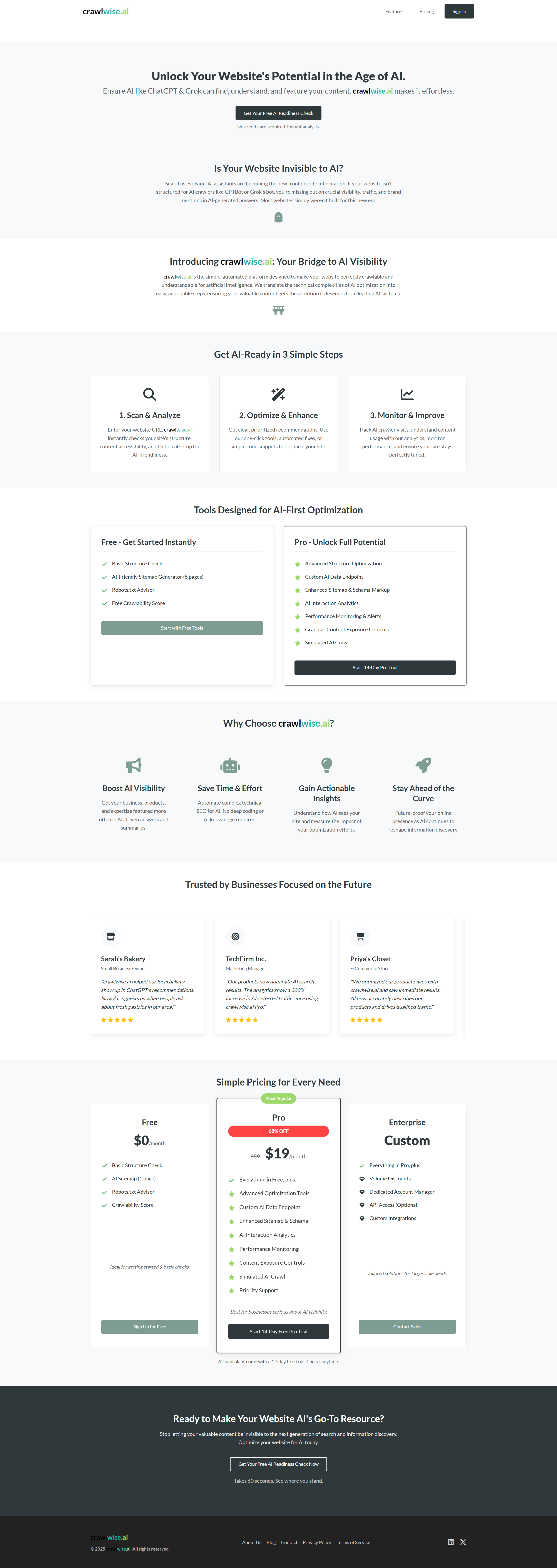
An AI-visibility platform for SMBs. Scan a website, publish clean endpoints for ChatGPT, Claude, Grok, and Perplexity, and track which AI systems are actually reading your content. Free tier for the basics, Pro at $19/month for the full toolkit.
When someone asks ChatGPT, Claude, Grok, or Perplexity about a business, the model isn't pulling from its prettiest landing page. It's pulling from whatever it can cheaply, reliably parse, if it can find anything at all. Most sites were built for human readers and Google's crawler, not for a language model trying to summarise them in one paragraph.
crawlwise.ai closes that gap. Point it at a domain, let Playwright crawl the pages and Cheerio parse them, let a tuned AI pipeline (DeepSeek primary, OpenAI fallback) normalise the content, then publish structured endpoints (llms.txt, llms-full.txt, Markdown, JSON, plain text) that AI crawlers can consume directly. Per-endpoint access rules, a crawler allow-list with 20+ AI user-agents, Lighthouse-backed performance audits, and live analytics on who's asking for what.
The build is a Laitent Space studio project. Free tier covers a structure check, crawlability score, and a starter robots.txt / sitemap; Pro ($19/month) unlocks custom endpoints, schema markup, content-exposure controls, AI interaction analytics, and a simulated-crawl preview of what an AI actually extracts.
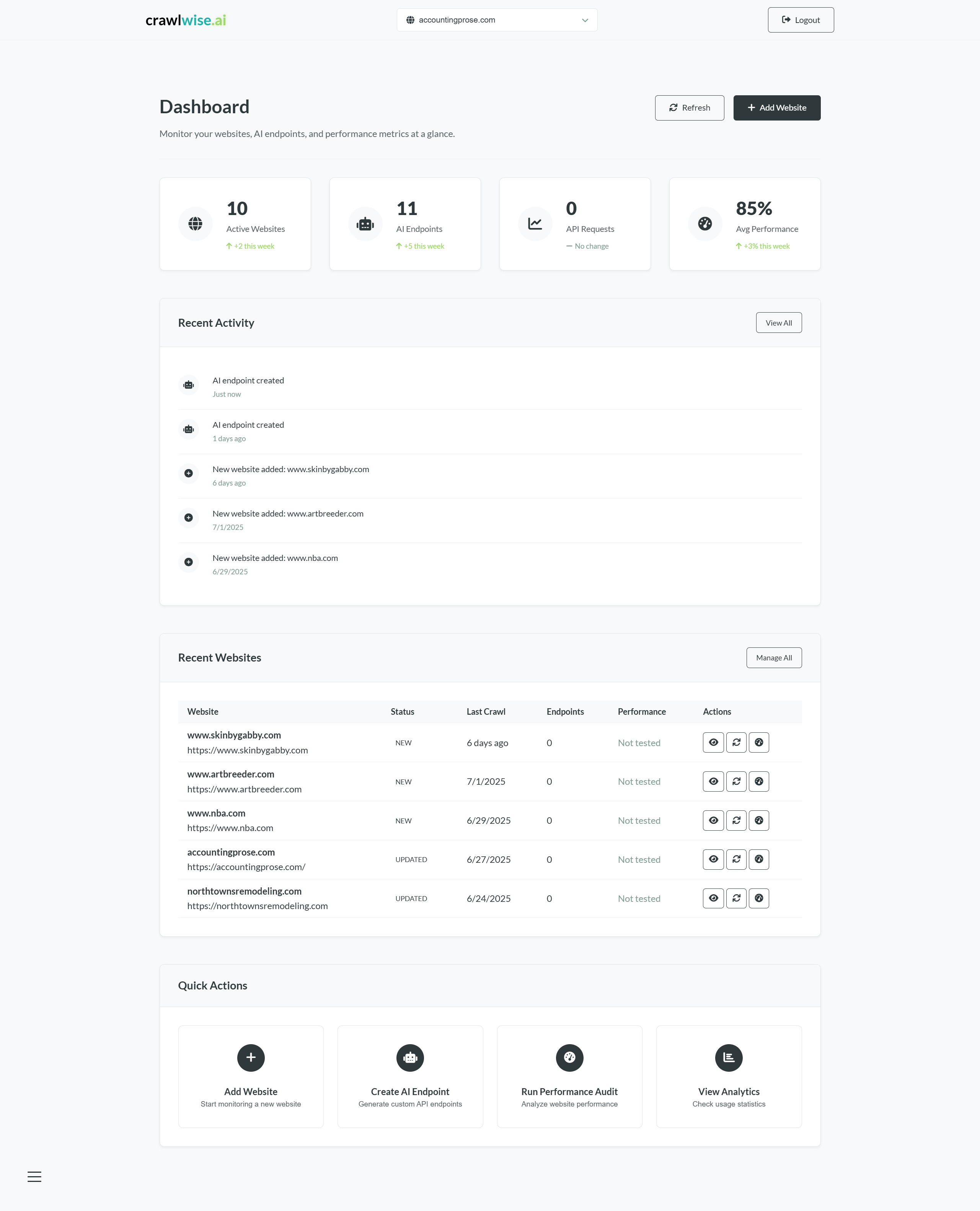
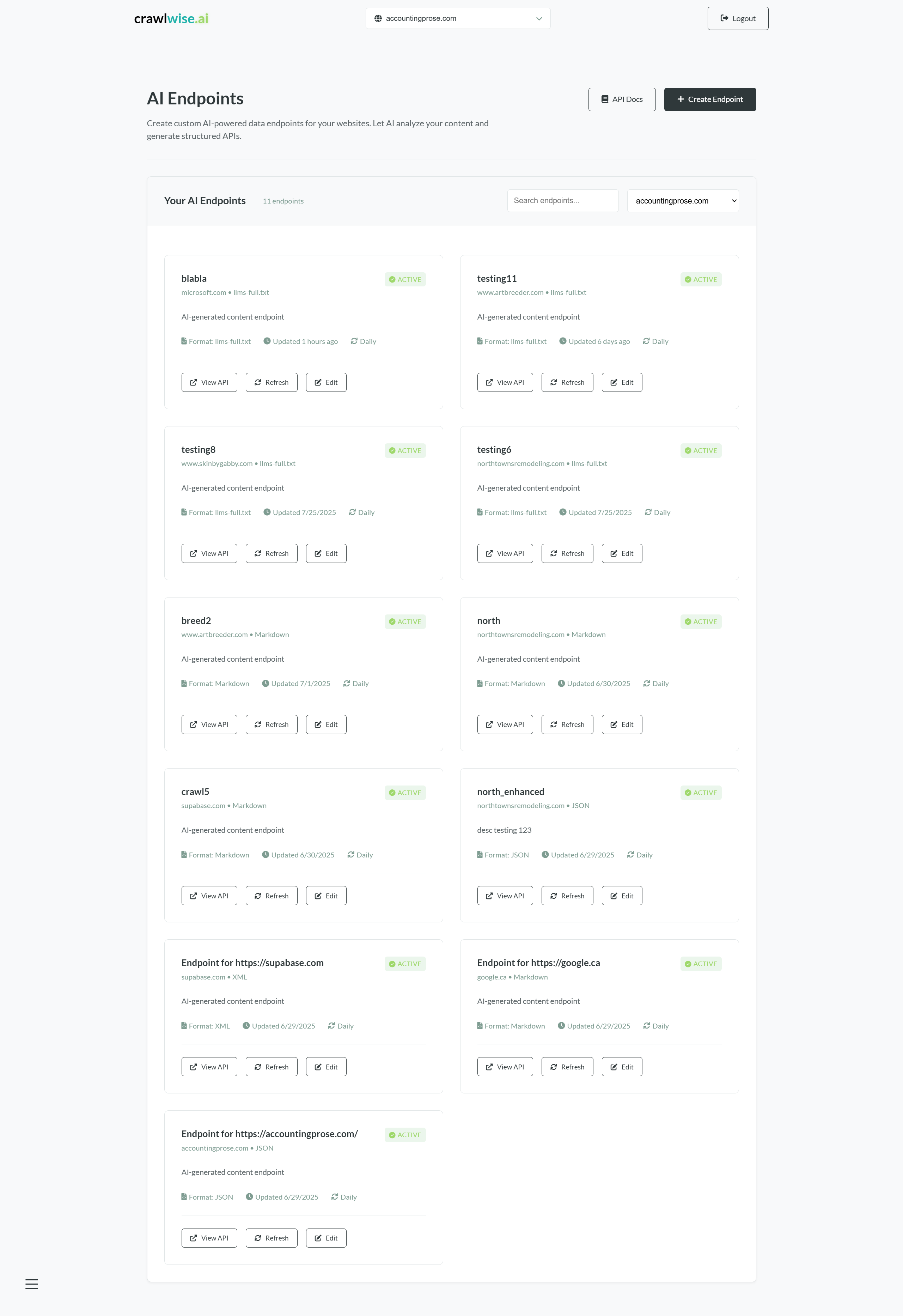
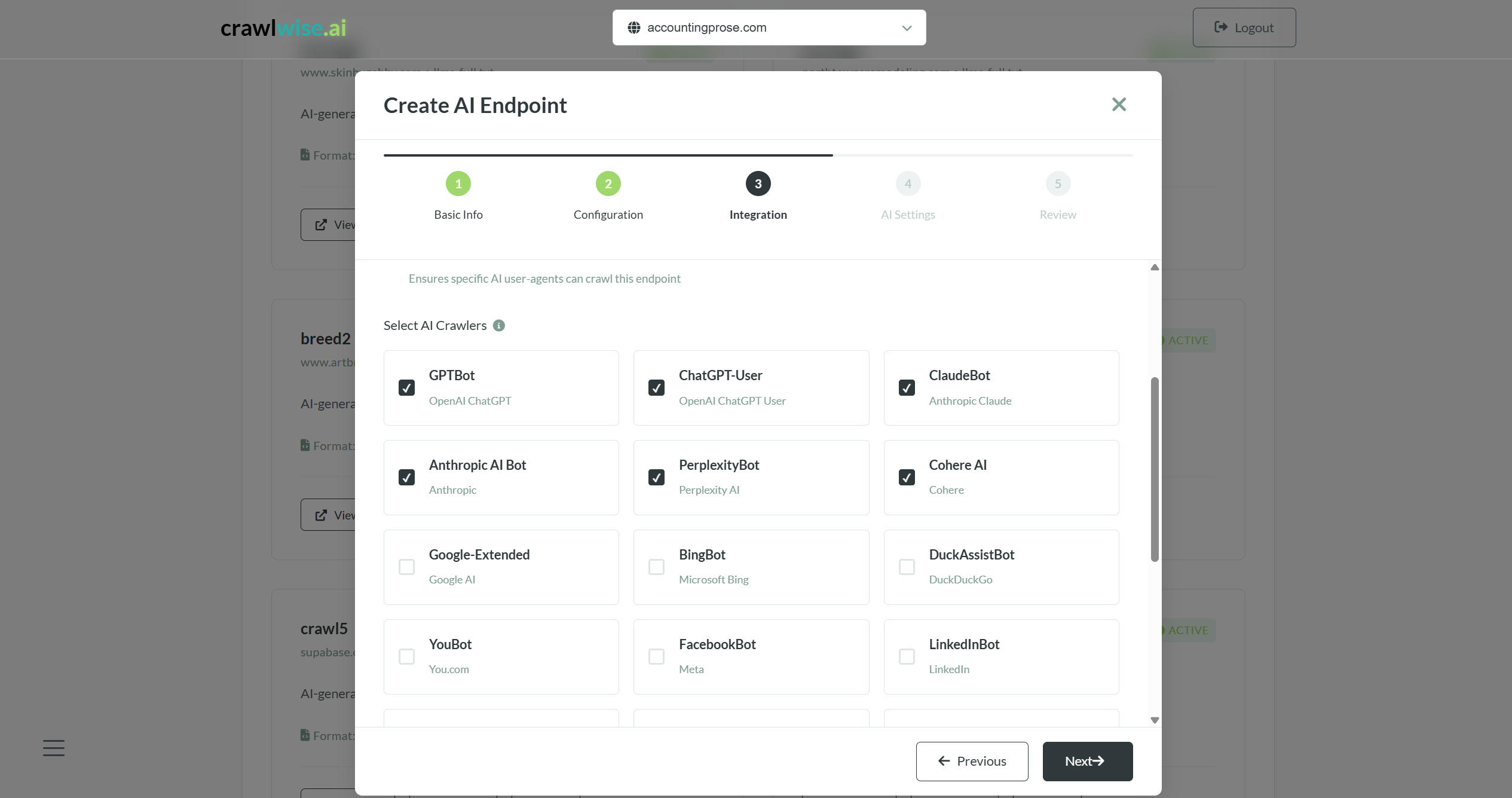
The dashboard is an at-a-glance for websites under management: AI requests, endpoints live, average performance. From there you drop into endpoint management (where the actual machine-readable artefacts live), into a five-step wizard for new endpoints (basic info, format, crawler allow-list, AI settings, review), or into analytics to see which AI systems showed up this week and what they asked for.
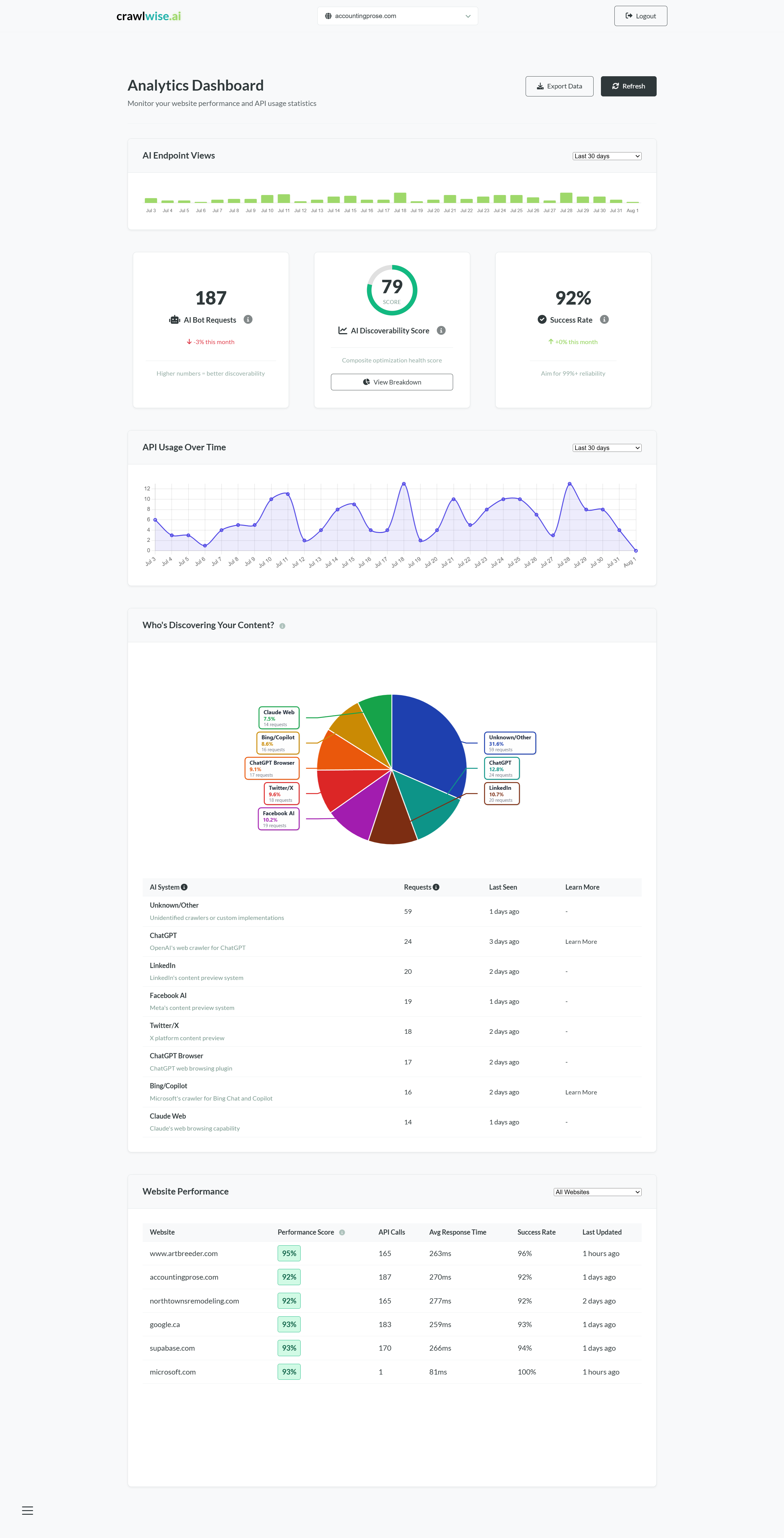
The analytics view is the payoff. A breakdown of traffic by crawler (GPTBot, ClaudeBot, PerplexityBot, Cohere, Grok, and more), a discoverability score, and per-site performance trendlines. The first time you see Claude and GPT both hitting the same endpoint, the thesis stops being theoretical.
We're finishing the crawl pipeline (better handling of JS-rendered sites, smarter diffing between runs) and tuning the endpoint formats so the content is useful to a model, not just valid. Performance Monitoring and Analytics are live; the wizard for creating new endpoints is near done.
Planned: team accounts, scheduled re-crawls, a notification layer for when a new AI crawler starts hitting your domain, and a public directory of opt-in endpoints for anyone building on top.
Private beta opens shortly. If you run a site you'd like AI systems to read properly, drop us a line and we'll get you on the list.